All Categories
Featured
Table of Contents
In 2026, more analysts will require proficiency in data science, scenario modeling, and even standard programming. CFOs will purchase retraining programs (as noted) and may hire differently. Organizationally, financing groups may rearrange into hub-and-spoke (shared services for core tasks, centers of excellence for strategy/P & L assistance). The balance between generalist and professional roles is likewise altering: more functions will be "financial analytics partner" rather than "deal processor." Increased financial investment in AI and cloud brings its own challenges.
This requires robust IT governance something particularly highlights. While CFOs might champion technology, they need to collaborate carefully with CIOs to focus on projects and prevent redundant "tech sprawl." A mistake (e.g. bad information governance) might negate the benefits of increased spending. Traditional finance success was often determined in percent cost decrease.
CFOs and the board will progressively depend on well balanced scorecards. As one JPMorgan executive indicated, concentrating on unit economics (cost per transaction or per client) instead of outright budgets uses a more nuanced picture of performance . Financing might be examined on worth metrics like percentage of time spent on analysis vs.

By judiciously cutting carefully and investing in adaptability (versatility planning, preparation workforceVersatile labor force suppliersVaried, companies become business end up being much better weather downturns. The world is getting in 2026 after multiple years of shocks; CFOs who have actually already lowered fixed costs will have more freedom to sustain operations if demand falls. Alternatively, CFOs who have bought real-time analytics and nimble planning can respond faster to brand-new crises.
Understanding Labor Law Shifts On Corporate Strategy
They will inspect whether financial investments (e.g. in AI or ESG) are delivering promised efficiencies. Mindful tracking of project ROI will end up being standard practice in impact, CFOs need to "offer" their cost programs internally. The focus on communication (from the AFP case) recommends that financing leaders should frame optimization as a constant service improvement procedure, not simply a one-time purge.
Rather of serving as mere "bean counters," CFOs are evolving into. In 2026 and beyond, one can anticipate CFOs to champion digital transformation simply as strongly as they do budget plan examination. Those who succeed will be the ones who all at once refine the engine (finance procedures) and include high-octane fuel (technology and talent).
Instead of slashing budgets haphazardly, leading CFOs utilize savings to fuel financing improvement and more comprehensive company development. Key data points enhance this view: e.g., identify "enterprise-wide cost optimization" as a leading priority , yet consider AI extremely important to their financing departments . Case studies show that structured expense programs can produce substantial revenue increases (in one case $19M) without undermining ability .
For professionals, the advice is multifold: maintain extensive cost controls (utilizing tools like zero-based budgets and cross-functional performance evaluations), however make sure that those measures are tied to strategic goals. Invest judiciously in locations with clear ROI in specific, automation and analytics that both lower costs and enhance decision-making. Continually upskill the financing team so that expense savings equate into value, not layoffs.
In conclusion, as CFOs sharpen their pencils on the budget, they need to likewise watch on the horizon. The most successful financing chiefs will be those who see expense optimization as the gateway to development ensuring that the resources maximized today lay the structure for tomorrow's opportunities .
Why Enterprise Cost Efficiency Requires Modern Offshore Frameworks
Each claim above is supported by cited evidence from these sources.
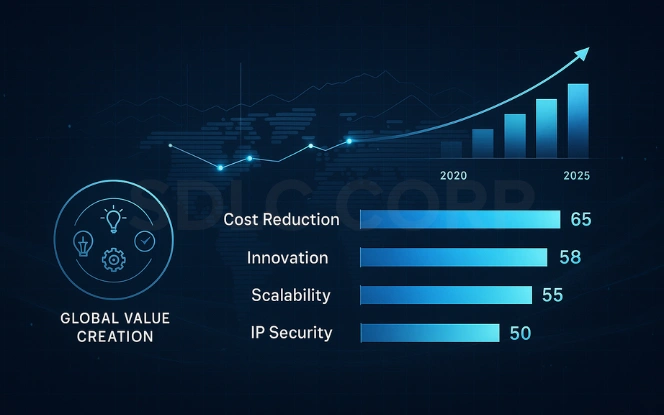
Cost reduction is a tactical method undertaken by organizations to decrease their costs and enhance success. It involves determining and eliminating non-essential spending, optimizing operations, and leveraging technology to accomplish more effective processes. The importance of expense decrease can not be overstated, particularly in its capability to bolster enterprise worth production.
One of the primary functions of cost reduction is to reinforce a business's success and money flow. Furthermore, expense reduction is crucial in improving functional performance, ensuring that services can provide products and services without wasting resources, which can lead to continual success.
Instead of slashing budget plans haphazardly, leading CFOs utilize savings to fuel finance change and more comprehensive company growth. Secret information points strengthen this view: e.g., recognize "enterprise-wide expense optimization" as a top concern , yet think about AI incredibly important to their finance departments . Case studies demonstrate that structured cost programs can generate significant revenue increases (in one case $19M) without weakening capability .
International Talent Management Shifts for Scalable Expansion
For practitioners, the guidance is multifold: preserve extensive cost controls (utilizing tools like zero-based budget plans and cross-functional effectiveness reviews), but guarantee that those measures are connected to strategic goals. Invest sensibly in areas with clear ROI in particular, automation and analytics that both lower expenses and improve decision-making. Constantly upskill the financing team so that expense savings equate into value, not layoffs.
In conclusion, as CFOs sharpen their pencils on the budget plan, they should likewise watch on the horizon. The most successful finance chiefs will be those who see expense optimization as the gateway to development guaranteeing that the resources released up today lay the structure for tomorrow's opportunities .
Each claim above is supported by pointed out evidence from these sources.
Navigating International Workforce Law Changes in Future
Cost reduction is a strategic method carried out by organizations to decrease their expenditures and improve success. It involves identifying and removing non-essential spending, enhancing operations, and leveraging innovation to attain more efficient procedures. The significance of expense reduction can not be overemphasized, especially in its capacity to strengthen business worth creation.
One of the main functions of expense decrease is to strengthen a company's success and money flow. In addition, cost reduction is instrumental in enhancing operational performance, making sure that organizations can provide products and services without wasting resources, which can lead to sustained success.

Latest Posts
Navigating GCC Expansion for 2026
Legal Proven Practices When Implementing International Labor Laws
Why Global Budget Reduction Requires Advanced Offshore Systems